- English
- Español
- Português
- русский
- Français
- 日本語
- Deutsch
- tiếng Việt
- Italiano
- Nederlands
- ภาษาไทย
- Polski
- 한국어
- Svenska
- magyar
- Malay
- বাংলা ভাষার
- Dansk
- Suomi
- हिन्दी
- Pilipino
- Türkçe
- Gaeilge
- العربية
- Indonesia
- Norsk
- تمل
- český
- ελληνικά
- український
- Javanese
- فارسی
- தமிழ்
- తెలుగు
- नेपाली
- Burmese
- български
- ລາວ
- Latine
- Қазақша
- Euskal
- Azərbaycan
- Slovenský jazyk
- Македонски
- Lietuvos
- Eesti Keel
- Română
- Slovenski
- मराठी
- Srpski језик

2026 Global Ball Valve Industry Trends: Compliance Upgrades and Expanding Cross-Industry Demand
In 2026, driven by the modernization and upgrading of global infrastructure across the oilfield, chemical, pharmaceutical, and water treatment sectors, the global industrial valve industry is experiencing a wave of steady structural advancement. As core components for fluid control, ball valves maintain stable market demand, with the industry’s development focus shifting toward standardized compliance, product durability, and comprehensive testing capabilities. Against the backdrop of global industrial automation and pipeline system retrofitting, high-standard industrial ball valves—exemplified by API 6D-certified products—have become the preferred choice for cross-border engineering procurement. This article examines the current state of the valve industry, technical standards, and application market characteristics, taking into account prevailing manufacturing specifications and evolving market demands.
1. Current Status of the Global Industrial Valve Industry
1.1 Upgrading of End-Use Sectors Drives Steady Market Growth
In 2026, the global industrial valve market continues to grow steadily, fueled by ongoing investments in oil and gas field development, chemical industrial park upgrades, municipal water treatment, and pharmaceutical infrastructure. Industry data indicates a steady rise in the market size for carbon steel and stainless steel industrial valves; the oil and gas sector accounts for the largest share of demand, followed closely by fine chemicals and environmental water treatment, which serve as key application areas for valve products.
Moving away from traditional, extensive production models, the industry's core competitive logic has fundamentally shifted from mere capacity expansion to three key dimensions: standardized certification, end-to-end quality control, and reliable cross-border supply. An increasing number of international buyers and North American engineering contractors now mandate API standards and ISO quality management system certifications as essential criteria for supplier selection, thereby driving the global valve manufacturing industry toward high-quality development characterized by standardization and regulatory compliance.
1.2 Compliance with Industry Standards as a Key Competitive Threshold
In recent years, global industrial safety regulatory frameworks have been continuously upgraded, imposing stricter requirements on the pressure resistance, sealing performance, and corrosion resistance of fluid control equipment. For valve equipment used in extreme operating environments—such as oilfields and chemical plants—full compliance with authoritative international standards has become a prerequisite for market entry and a fundamental requirement for deployment in high-end engineering projects.
Notably, the API 6D standard serves as the core manufacturing and testing specification for pipeline ball valves, encompassing the entire lifecycle of the product, including design, material selection, machining, pressure testing, and final factory inspection. Meanwhile, ISO 9001 certification has become the foundational standard for valve manufacturers, enabling standardized control across the entire process—from raw material procurement to the delivery of finished products. During factory testing, the industry generally adheres to the API 598 standard to conduct specialized checks on sealing integrity and performance, effectively ensuring zero-leakage, stable operation under high-pressure and corrosive conditions.
2. Core Specifications and Technical Parameters of Mainstream Industrial Valves
In current industrial applications, mainstream valves such as ball valves and check valves have established mature, standardized industry specifications. Diverse application scenarios—ranging from oilfield pipeline transport and chemical media transfer to municipal water supply and treatment—have clearly defined requirements regarding valve materials, pressure ratings, testing standards, and compatible media. The table below summarizes the core technical parameters of mainstream industrial valves currently on the market, aligning precisely with the key evaluation criteria used by international procurement clients.
| Product Type | Certification Standard | Inspection Specification | Main Application Scenarios | Core Technical Features |
|---|---|---|---|---|
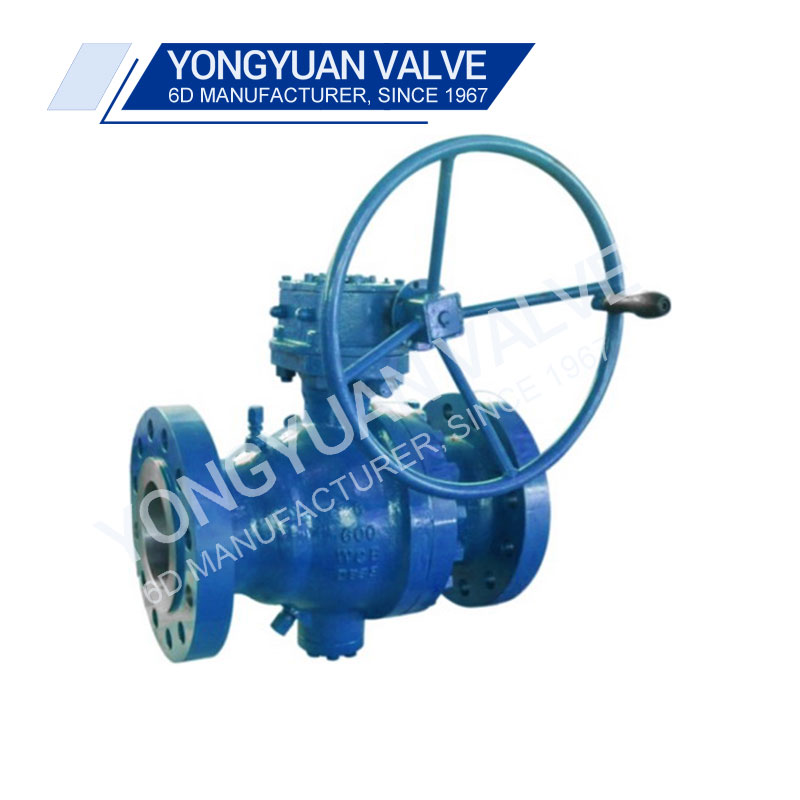
| API 6D Ball Valve | API 6D, ISO9001 | API 598 / API 6D | Oilfield pipeline, petrochemical industry, long-distance fluid transmission | High pressure resistance, excellent sealing performance, suitable for extreme working conditions, long service life |
| Industrial Check Valve | ISO9001 Industry Standard | API 598 Routine Inspection | Chemical production, water treatment, pharmaceutical fluid pipeline | Prevent medium backflow, stable operation, low maintenance cost |
| General Industrial Ball Valve | ISO9001 | Conventional industrial pressure test | Municipal water supply, conventional industrial supporting scenarios | High cost performance, strong versatility, convenient installation and maintenance |
Notably, ball valves compliant with the API 6D standard are poised to become essential products in the cross-border export market by 2026. Thanks to their superior high-pressure resistance and sealing stability, these valves are well-suited for the complex and harsh operating conditions found in oilfields and chemical plants, earning widespread recognition in North American and global engineering procurement markets. Comprehensive standardized testing prior to shipment is the critical factor in ensuring consistent performance and quality for exported valves.
3. Trends in the Upgrading of Global Valve Manufacturing Processes and Quality Control Systems
3.1 Diverse Casting Processes to Meet Varied Market Demands
As industrial applications become increasingly specialized, the valve industry faces rising demands for product precision and material density. Leading manufacturers currently employ a dual-process strategy—combining sand casting and precision investment casting—to meet the production needs of various valve types. Sand casting is typically used for large, conventional valves, offering high production efficiency and consistent batch quality; investment casting focuses on high-precision, small-sized core components, delivering smooth surface finishes and high dimensional accuracy to meet the exacting fit requirements of high-end industrial piping systems.
A comprehensive suite of precision machining equipment serves as the foundation for standardized production. High-end production lines are equipped with hundreds of precision machining units, enabling in-house control over the entire manufacturing process—from casting rough blanks to precision machining and final assembly. This approach eliminates quality variances associated with outsourced processing, significantly enhancing the consistency and stability of mass-produced products.
3.2 Comprehensive Testing Systems Become Industry Standard
Robust quality inspection capabilities are the cornerstone for ensuring valve products meet international standards. Leading manufacturers in the industry have established professional physicochemical testing laboratories equipped with a full suite of testing instruments—such as spectral material analyzers, tensile testing machines, hardness testers, ultrasonic flaw detectors, wall thickness gauges, and metal film analyzers—enabling comprehensive testing that covers raw material composition, mechanical properties, internal flaw detection, and physicochemical analysis of finished products.
A closed-loop quality inspection system—spanning raw material intake checks, in-process spot checks, and full-item testing of finished products—effectively filters out non-conforming items. This ensures that every batch of valves meets API and ISO international standards, providing reliable quality assurance for the long-term, safe, and stable operation of industrial fluid control systems; this represents the mainstream direction for industry upgrades leading up to 2026.
4. Characteristics and Demand Patterns of the 2026 Cross-Border Export Market
4.1 Sustained Demand for High-Standard Valves in the North American Market
The North American market remains a core high-end destination for global industrial valve exports, imposing extremely rigorous entry standards regarding product certifications, testing procedures, and performance metrics. Recent projects—including local oilfield development, chemical facility upgrades, and water environmental remediation—have driven steady demand for high-end industrial valves, such as API 6D-compliant ball valves.
Unlike standard valves for civil use, industrial valves exported to North America must pass stringent API factory acceptance tests, adhering to zero-tolerance standards for sealing integrity, pressure resistance, and material compliance. The steady export of standardized products underscores the growing international recognition of Chinese-manufactured valves.
4.2 Industry Associations Drive Overall Industrial Upgrading through Standardization
The standardized development of China's valve industry relies heavily on the guidance and regulatory frameworks provided by industry associations. As governing members of the China Valve Association, leading manufacturers have long participated in setting industry standards and optimizing the sector, driving a transition from extensive OEM production toward high-quality, standardized, and brand-oriented operations. Today, top-tier manufacturers—exemplified by YONGYUAN VALVE—have become designated suppliers of high-quality chemical equipment, continuously propelling the overall brand elevation of China's valve export industry.